SmarterDx
Redesigned clinical diagnostics to boost accuracy 60%
RCMLLMICD-10SepsisClinical AI
01WHAT IS PREBILL IN RCM
What is PreBill in RCM?
1
CLINICAL DOCUMENT INTEGRITY
Pre-bill Design Focused
Once a patient has been discharged and the encounter has been coded.
Common sense ML is applied to flag new revenue & quality improvements.
2
REVENUE OPPORTUNITY?
Clinical UI Storytelling
Once a patient has been discharged and the encounter has been coded.
If a new Pdx opportunity exists with higher revenue, then an internal CDI team needs to verify.
3
SEND TO CLIENT
New or resequenced primary diagnosis?
Select evidence and send to client
If client approves, revenue is attributed to efforts
02The Team
1
My Role
Senior Product Designer
- Owned information architecture, visual design, and usability testing.
- Defined the "explainable AI" layer for every recommendation.
2
Stakeholders
- Clinical SMEs (nurses, coders)
- Data science (model development and feature importance)
- Product (RCM strategy)
- Engineering (EHR integration)
3
Scope
2.5 months
- Deployed to internal CDI team
- Clinical validation studies
4
Tools
FigmaFigJamProduct DiscoveryJira
03The Challenge
The Validation Gap
1
The Context
Each patient encounter explodes into over 30,000 data points, creating a massive validation burden.
Despite their expertise, manual review inevitably leads to missed diagnoses and lost revenue.
2
Clinical Impact
Incomplete documentation resulting in revenue leakage.
AI models that flag diagnoses without explaining 'why'.
Slow review cycles that delay billing and increase denials.
3
Design Challenges
Consolidating all data into a single trusted view.
Showing the 'why' behind AI suggestions.
Identifying workflows that speed up decision making without reducing accuracy.
04The Process
From Research to Validation
1
Clinical Research & Discovery
Facilitated design thinking workshops to investigate why valid clinical opportunities were being rejected.
By combining these collaborative sessions with real-time shadowing, I uncovered the specific evidence gaps causing clients to disagree with our findings.
2
ANALYZED MVP & IDENTIFIED MODULAR PATTERNS
Moving beyond 'One Size Fits All'
Audited the existing "single view" MVP and identified that a one-size-fits-all approach failed for complex conditions.
Define a modular UI framework where clinicians see tailored components based on the diagnosis (e.g., Sepsis, Metabolic Encephalopathy, CHF) rather than a generic chart.
3
Prototype & Clinical Testing
Iterative testing with CDI staff using high-fidelity interactive prototypes.
Identified which features had the highest impact on improving revenue, allowing us to double down on what worked.
4
Implementation & Validation
Deployment and real-world performance monitoring.
Ensured pixel-perfect handoff, integrated clinical workflows, and monitored agreement rates via HEX data dashboards.
05The Solution
Dynamic Clinical UI
1
Dynamic Clinical Layouts
Moved beyond a single generic view to a dynamic system where the interface changes structure based on the specific clinical condition.
Designed tailored workflows for Sepsis, Metabolic Encephalopathy, CHF, and STI to match their unique validation criteria.
2
Evidence-Driven Priority
The UI architecture is determined by the specific clinical data points that impact the DRG assignment.
It visually prioritizes the evidence needed to prove or disprove a Primary Diagnosis, shifting the focus from passive review to active validation.
3
Data Dense Visualization
Developed a rich, interactive visualization engine that synthesizes and plots key clinical diagnostic markers over time, allowing for rapid trend identification.
4
Clinical Decision Support
Integrated evidence-based treatment recommendations directly into the physician's workflow to reduce cognitive load and standardize care pathways.
5
Team Collaboration Tools
Enabled seamless care coordination with real-time patient status sharing and structured handoff communication tools between shifting care teams.
06The Impact
Clinical Confidence
1
60% Accuracy Boost
Redesigned clinical diagnostics to boost accuracy significantly through thoughtful design.
2
Leading Clinical Feedback
"Having a data dense visualization of real data that makes sense makes the world of difference. Being able to see all the sepsis-related data and tell that story of, this is the primary diagnosis, makes the world of difference." — Stephen, Lead Clinical Document Specialist
07Reflection & Learnings
The Retrospective
1
What Went Well
Early clinical stakeholder involvement led to accurate requirements.
Iterative design process prevented major usability issues.
Real-world testing validated design decisions.
Cross-functional collaboration improved solution quality.
2
Challenges
EMR integration complexity required creative solutions.
Managing clinical validation timelines and requirements involved constant negotiation.
Addressing varying workflows across different hospital units was critical.
3
Next Steps
Expand to additional infection prediction models.
Develop pediatric sepsis detection capabilities.
Add predictive antibiotic resistance modeling.
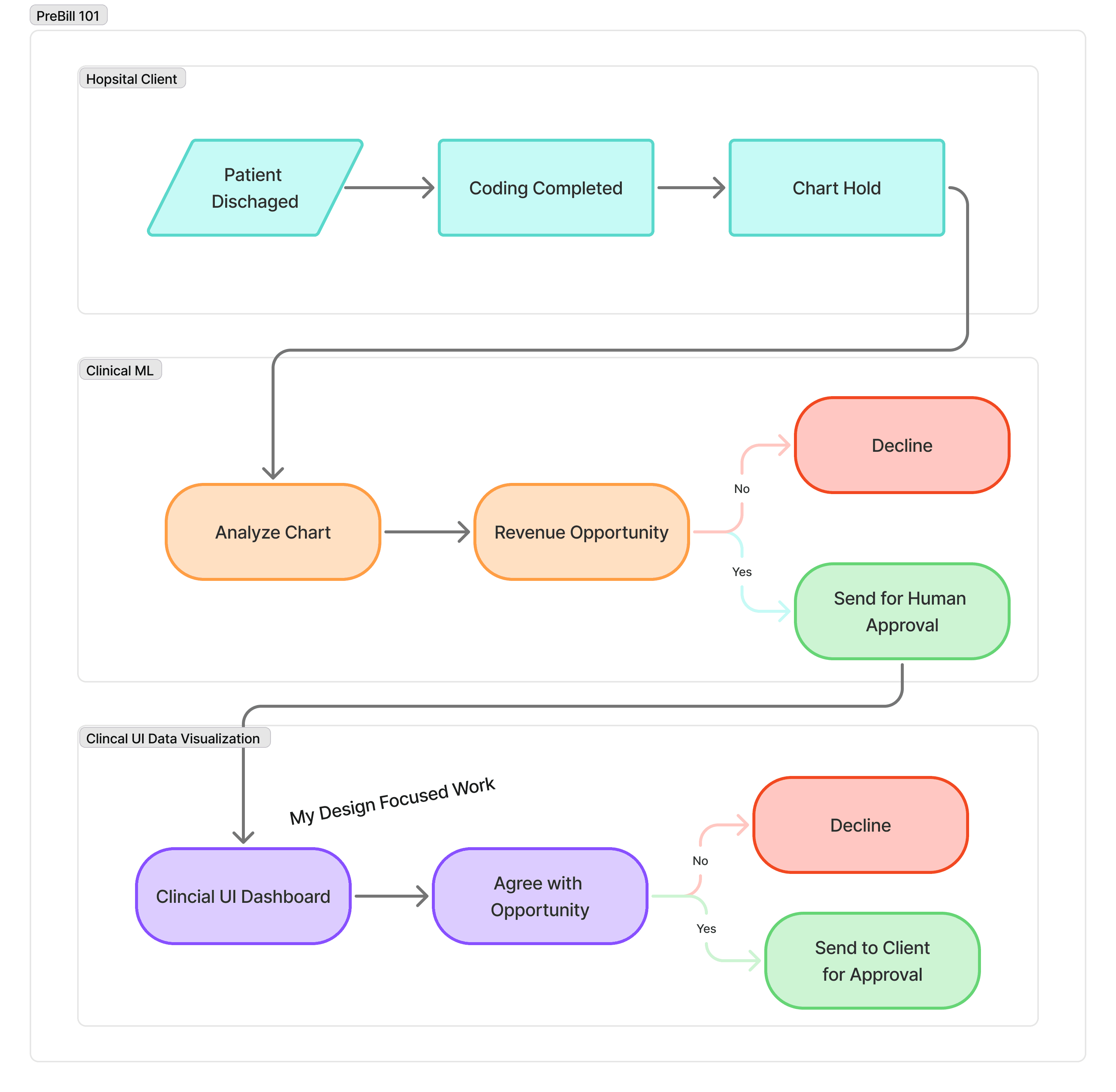
Figure 01
What is PreBill in RCM?


Figure 03
The Validation Gap

Figure 04
From Research to Validation

Figure 05
Dynamic Clinical UI
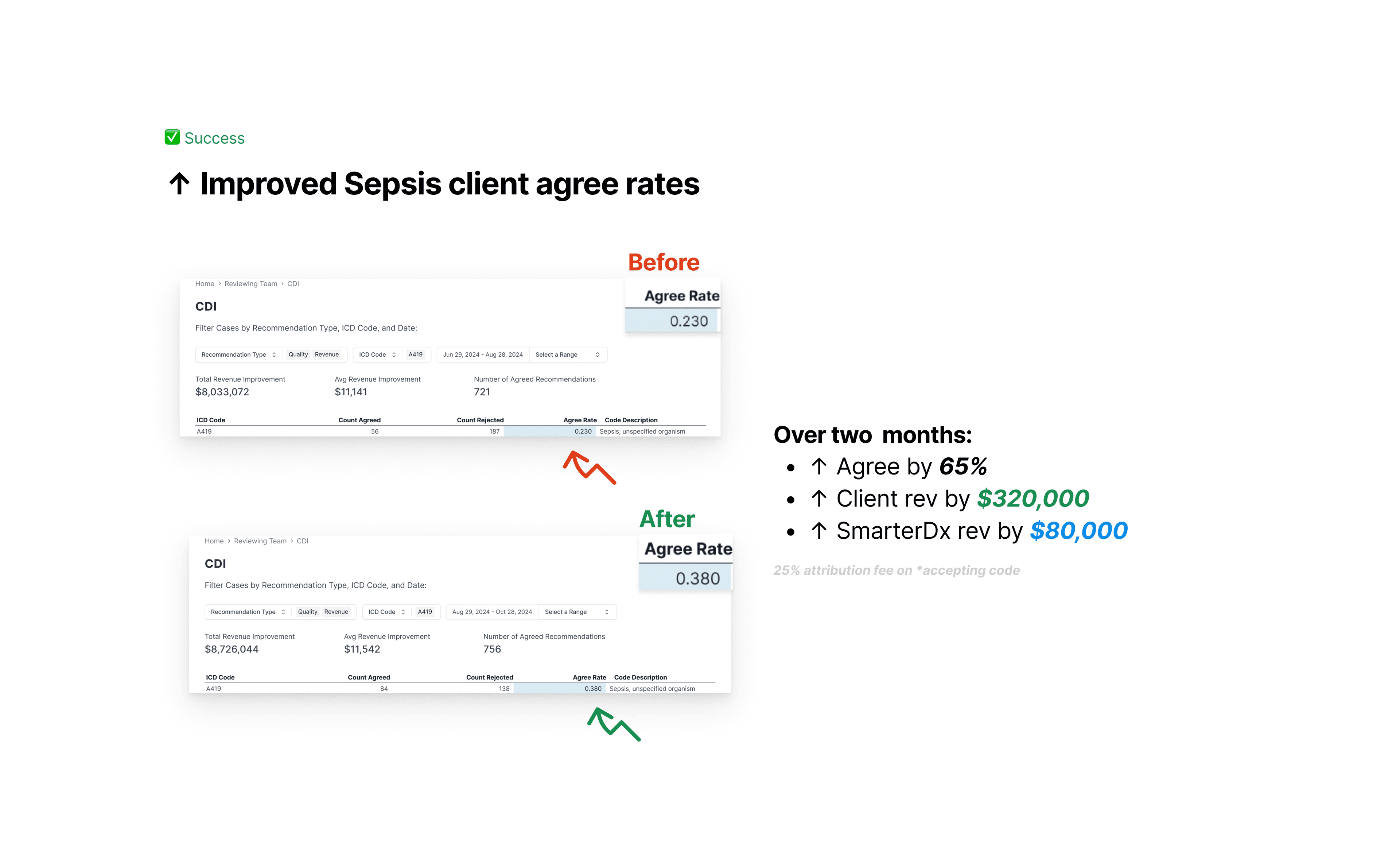
Figure 06
Clinical Confidence
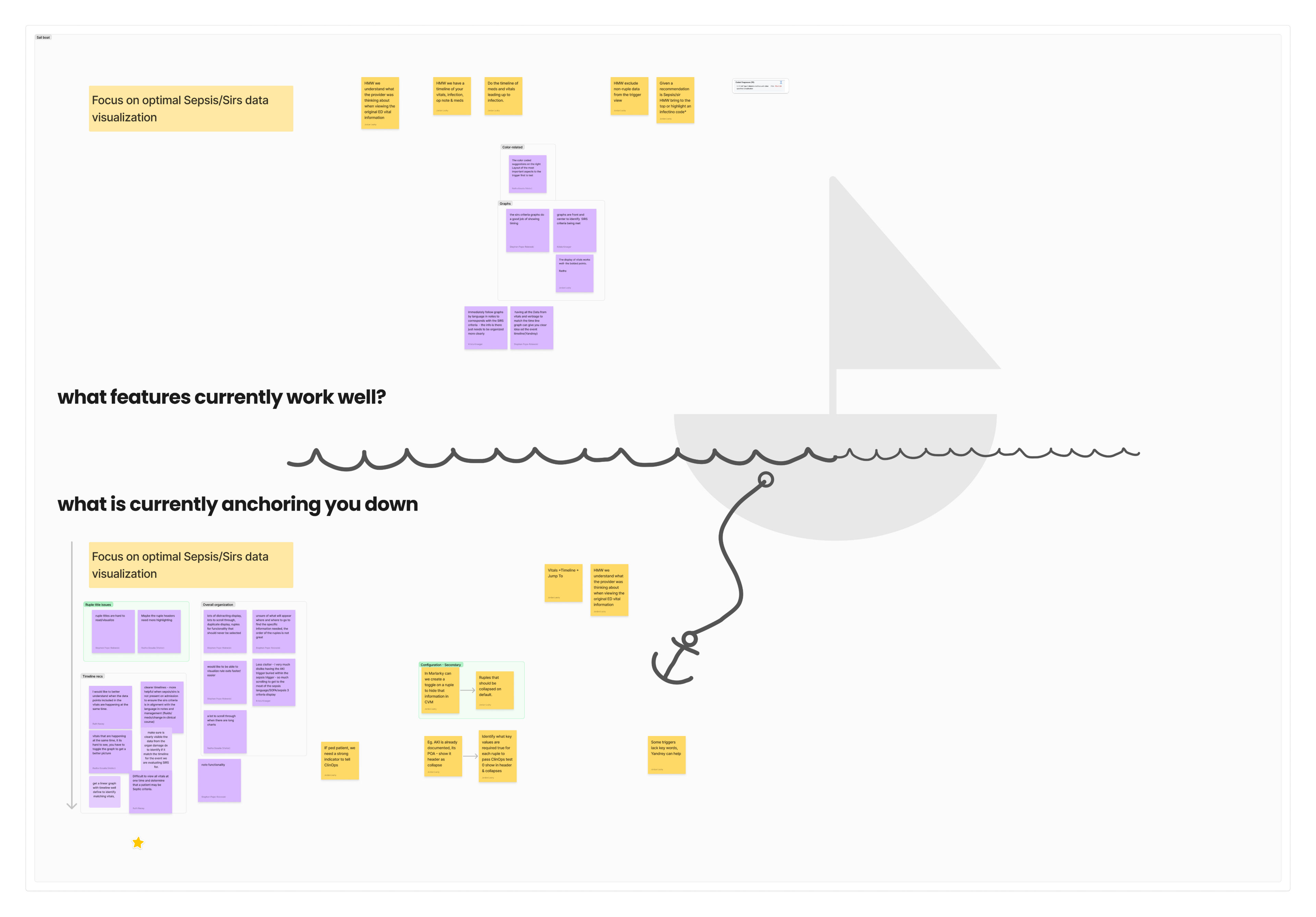
Figure 07
The Retrospective